
Why private dining blocks go wrong
A restaurant with a back room for about twenty guests gets a call on Tuesday for a Saturday birthday dinner. The manager says yes and writes it on the calendar by the host stand. Nobody removes those tables from the reservation system, so the online book still sells them. The deposit was "going to be sent," but no one wrote down when it was due. On Saturday the host has a full room of regular reservations, a birthday party at the door, and no record of whether the party paid anything.
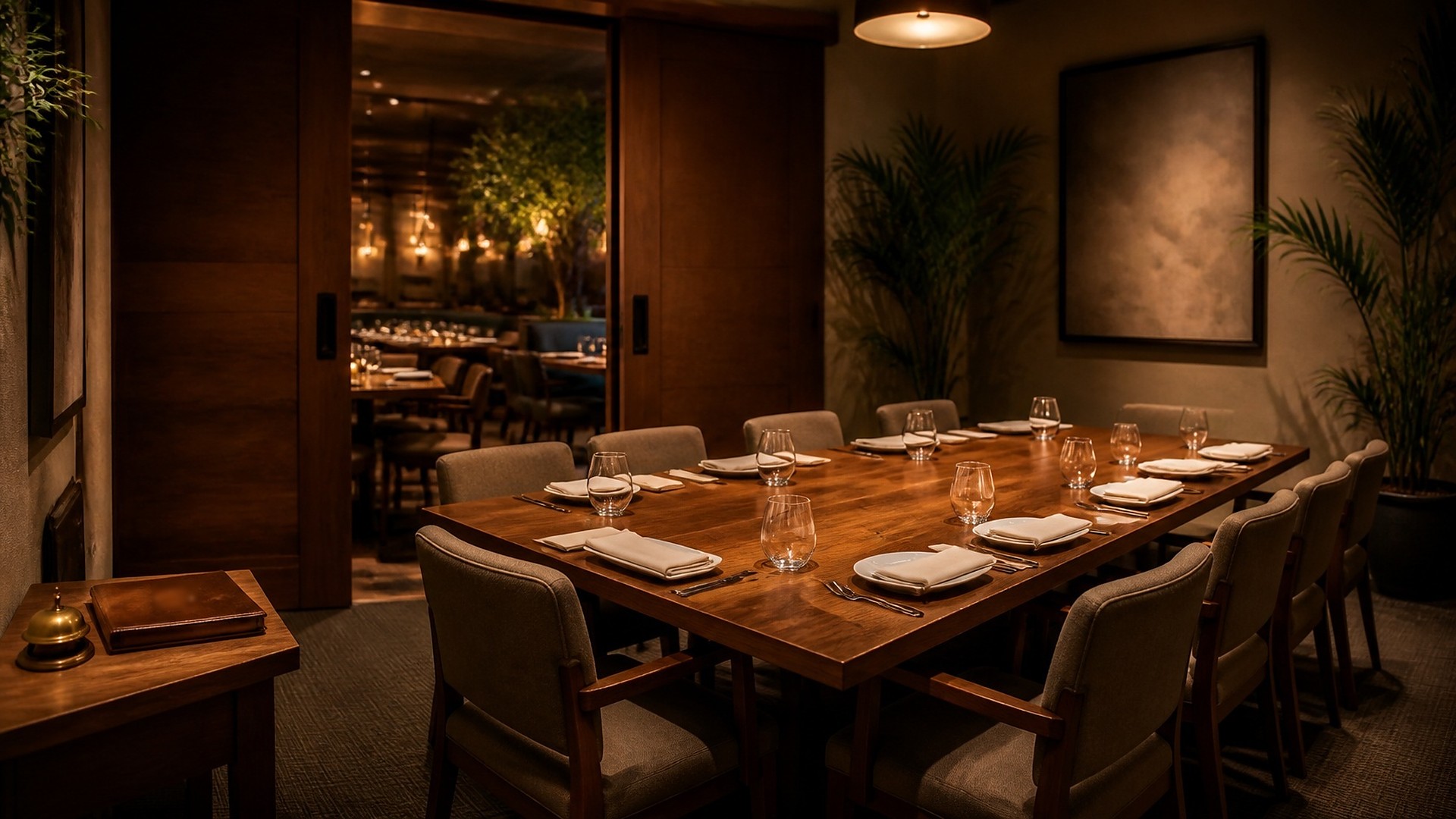
That scene is an original illustration, not a TwoQM client and not a measured result. The room was treated as a calendar note instead of inventory, and the deposit rule lived only in the manager's head.
TwoQM has already written about hold, tentative, and confirmed date boards for event venues and catering deposit and final balance tracking. This article covers the private space inside a working restaurant, where every block sold to a group is a block regular guests cannot book.
Group bookings tend to fail in the same ways:
The space is not linked to the reservation book. The event calendar says the room is taken, but the tables are still bookable online.
Blocks have no edges. The party is "at seven," but nobody blocked setup and reset time, so the next seating overlaps.
Deposit rules change by who answers the phone. One manager asks for a deposit, another does not, and the due date is a guess.
Unpaid holds never release. A tentative group keeps the room for weeks while regular guests are turned away.
Treat each space as inventory
Write down the spaces you actually sell, such as a private room, half a room behind a divider, a patio section, or a full buyout, and which tables each one removes from the regular book. Then define a block as one record with the same fields every time:
Space and block type. Which room or section, and whether it is a partial block or the whole space.
Time window. Arrival through departure, plus the setup and reset time your team needs on either side.
Party details. Host name, contact, preferred language, expected count, and occasion.
Status. Inquiry, tentative, confirmed, or released, with the date of every change and who made it.
Deposit and guarantee. Amount, due date, and payment status, plus the date the final guest count is due.
When a block is confirmed, the matching tables come off the regular book for that window. When it is released, they go back.
Write the deposit rules once
The deposit rules belong to your restaurant, not to whoever takes the call. Write them once per block type, and make the booking tool apply them the same way every time:
When a deposit is required. For example, by space, party size, or day of the week, using the thresholds you choose.
How it is set. A flat amount, a per-guest amount, or a share of an estimated food and beverage total, whichever your policy says.
When it is due. The number of days after the hold, or before the date, that your policy sets.
What happens if it is not paid. The block moves back to tentative or is released, and the host is told in plain words before that happens.
Cancellation and changes. Your written policy on refunds, credits, and count changes, shown to the guest before they pay.
These are examples of the kinds of rules restaurants write, not recommendations. The point is that the guest, the host stand, and the kitchen see the same rule.
Give the floor and kitchen the same view
On the day, the host stand needs to see which tables are blocked and why, and the kitchen needs the confirmed count, any set menu, and allergy notes. One daily view built from confirmed blocks answers both.
Where automation helps
This is ordinary business automation. Confirming a block removes its tables from the regular book. The guest gets a deposit request and a reminder in English or Spanish, from templates your staff approved. If the deposit is not received, the manager gets a task to call before the block changes status, and the final-count reminder goes out on the date your policy sets.
Connecting the tools you already use
If you already use a reservation platform, point-of-sale system, or online payment tool, connected systems work can link blocks to the reservation book and record deposits against the booking, if your current tools allow it. That is confirmed during scoping; sometimes your reservation platform already does most of this. When nothing fits, custom software can hold spaces, blocks, deposit rules, and the daily view in one place.
Where AI helps, and where it stops
AI integrations can turn an inquiry message into a draft block record for staff to review, draft a first Spanish deposit request for a bilingual team member to check, and summarize monthly how many holds were confirmed or released.
AI does not set deposit amounts, decide exceptions, confirm or release blocks, take payments, or send messages on its own. A manager approves every rule, every exception, and every template.
Where to start this week
List every group booking from the last two months and note whether a deposit was taken, whether the tables left the regular book, and whether anything went wrong on the day. If the problems trace back to holds that never released or deposits nobody tracked, start with the space list and one written deposit rule per block type.
TwoQM builds automation, connected systems, and custom software for restaurants in the Rio Grande Valley and beyond. If your private dining still runs from a calendar by the host stand, TwoQM can scope space blocks and deposit rules around your current tools. Pricing explains how business apps, systems, and custom software are scoped.
Describe Your Private Dining Workflow · Explore business automation