
What owner-dependent dispatch looks like
At 10:40 p.m. a customer calls a plumbing company about water under the kitchen sink. The answering service takes a message and texts the on-call tech. The tech is not sure whether this counts as an emergency, so he calls the owner. At 11:15 p.m. another call comes in about a slow drain, and the same thing happens. By morning the owner has made four decisions from bed, and nobody wrote down why.
After-hours calls are where unwritten rules hurt most: whoever answers decides quickly, with less help, often with an upset customer on the line. Rules written in advance let the on-call tech and the answering service decide without waking the owner, and let the morning crew see what happened overnight.
This is an operations article, not legal or licensing advice. Who may perform and supervise plumbing work in Texas is set by licensing rules from the Texas State Board of Plumbing Examiners; this piece does not cover licensing. TwoQM has written about routing contractor estimate requests and job photos during business hours, and about storm-season capacity boards for planned crew work. This piece covers the overnight decision itself: who goes out, when, and on what rule.
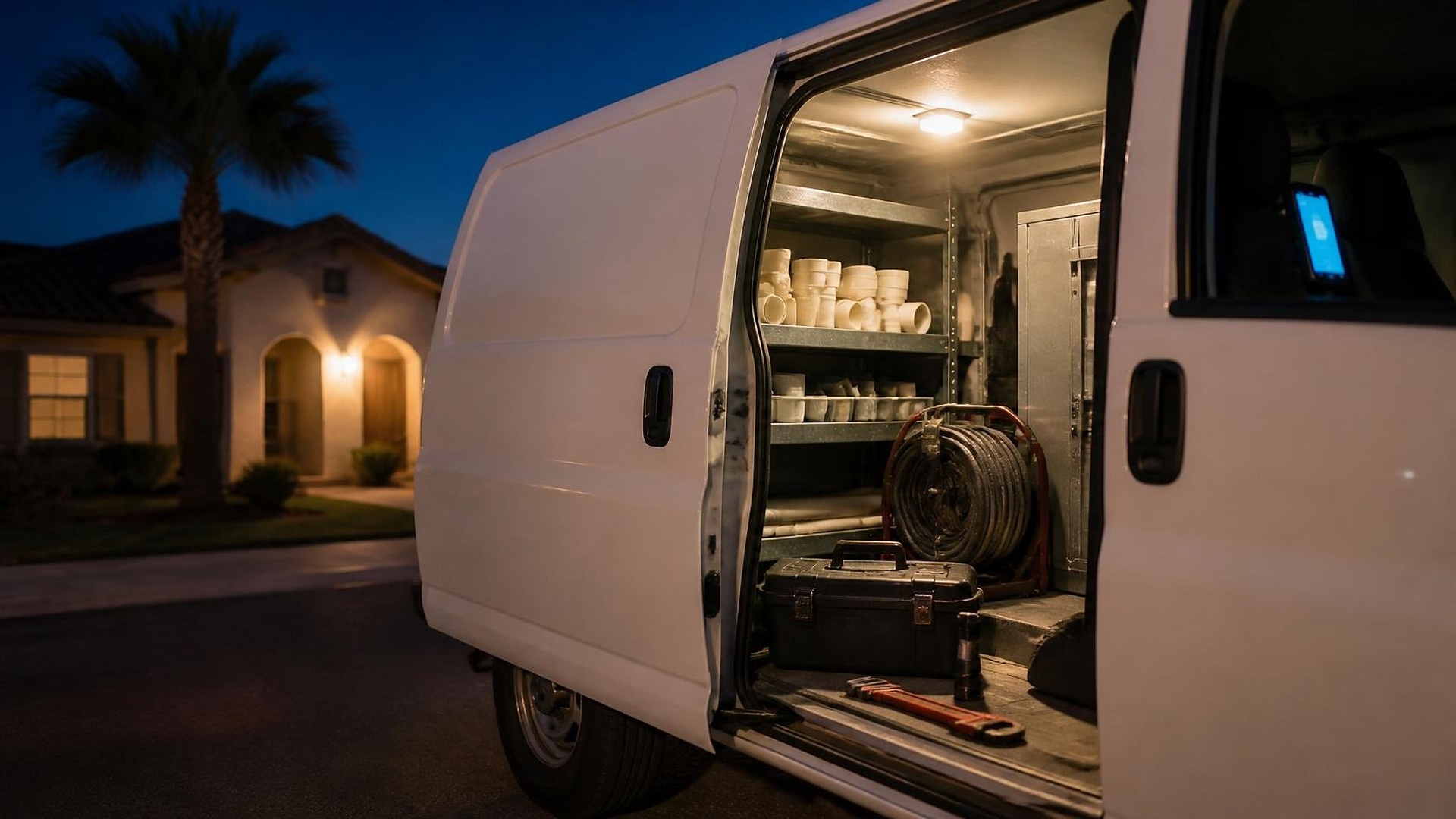
Here is an original illustration, not a TwoQM client and not a measured result. A South Texas plumbing shop runs four trucks and rotates one on-call tech each week. The answering service has a one-page script from years ago. The real rules live in the owner's head: which neighborhoods are too far after midnight, which commercial customers always get a truck, when to tell a caller to shut off the main and wait for morning.
The symptoms: the on-call tech calls the owner on most calls, two techs give different answers to the same situation, after-hours fees are explained inconsistently, and the morning crew finds out about overnight jobs from the customer.
Sort calls into a few clear categories
Agree on a short list of call types and what each triggers. For example:
Dispatch now. Situations your company decides cannot wait, such as active water that cannot be stopped at a fixture valve or a sewage backup inside the home.
Stabilize and schedule. The caller can safely shut off a fixture valve or the main and wait. Staff explain the shutoff, if the customer is comfortable, and book the first morning slot.
Next business day. Slow drains, running toilets, and quote requests. Staff take details and confirm a callback time.
Refer elsewhere first. Situations outside plumbing, such as a suspected gas leak, where your rule tells staff to direct the caller to the gas utility's emergency line or 911 before anything else.
Your company decides where each situation falls. The point is that the decision is written down once, not remade at midnight.
Write the triage questions in order
Give the answering service and the on-call tech the same short list of questions, in the same order:
Is water actively flowing right now, and can it be stopped at a valve?
Is sewage backing up inside the building?
Is there any smell of gas? If yes, follow the referral rule immediately.
Is the property residential or commercial, and is it a contract customer?
What is the address, and is it inside the after-hours service area?
Each answer points to a category. Keep the questions in English and Spanish with the same meaning, so every caller gets the same result.
Decide the owner exceptions in advance
Some calls should still reach the owner, by rule. List them: a commercial account with a written after-hours agreement, a job that needs a second tech, a customer disputing an after-hours fee, or anything the on-call tech believes is unsafe. Everything else follows the categories. Record the reason whenever the owner is called.
Explain after-hours charges the same way every time
Callers often ask what a night visit costs. Whatever your company charges, staff should explain it from one approved script, and the call log should note that the customer heard it and agreed before a truck rolls. That spares the customer and tech surprises.
Log every call for the morning handoff
Every after-hours call gets a short record: time, caller, address, category, who decided, what was done, and what happens next. At the start of the day the office sees overnight calls on one list: dispatched jobs to invoice, stabilized calls to schedule, and callbacks owed.
Where AI helps, and where it stops
Ordinary business automation can page the on-call tech, attach the triage answers to the call record, and build the morning list automatically.
AI can help with drafts a person reviews: a summary of a long voicemail, a follow-up text confirming the morning slot in English or Spanish, or a clean morning recap from the overnight log. AI does not decide categories, dispatch trucks, quote prices, or message customers on its own.
Connect the rules to the tools you already use
Many shops use an answering service, a scheduling app, and a group text, retyping details between them. Connected systems can pass the caller's triage answers from the answering service into the call record and the scheduling tool, so the on-call tech and the morning office see the same facts.
Where to start this week
Pull your last twenty after-hours calls. For each, write down what the caller described, what was done, and whether the owner was called. Group them into the categories above; where answers differed, write those rules first.
TwoQM builds connected systems and custom software for contractors and home services, including plumbing shops with on-call rotations. If your dispatch rules still live with the owner, TwoQM can scope an after-hours call and dispatch workflow around the tools you already use. Pricing explains how business apps, systems, and custom software are scoped.
Describe Your After-Hours Dispatch Workflow · Explore TwoQM connected systems