
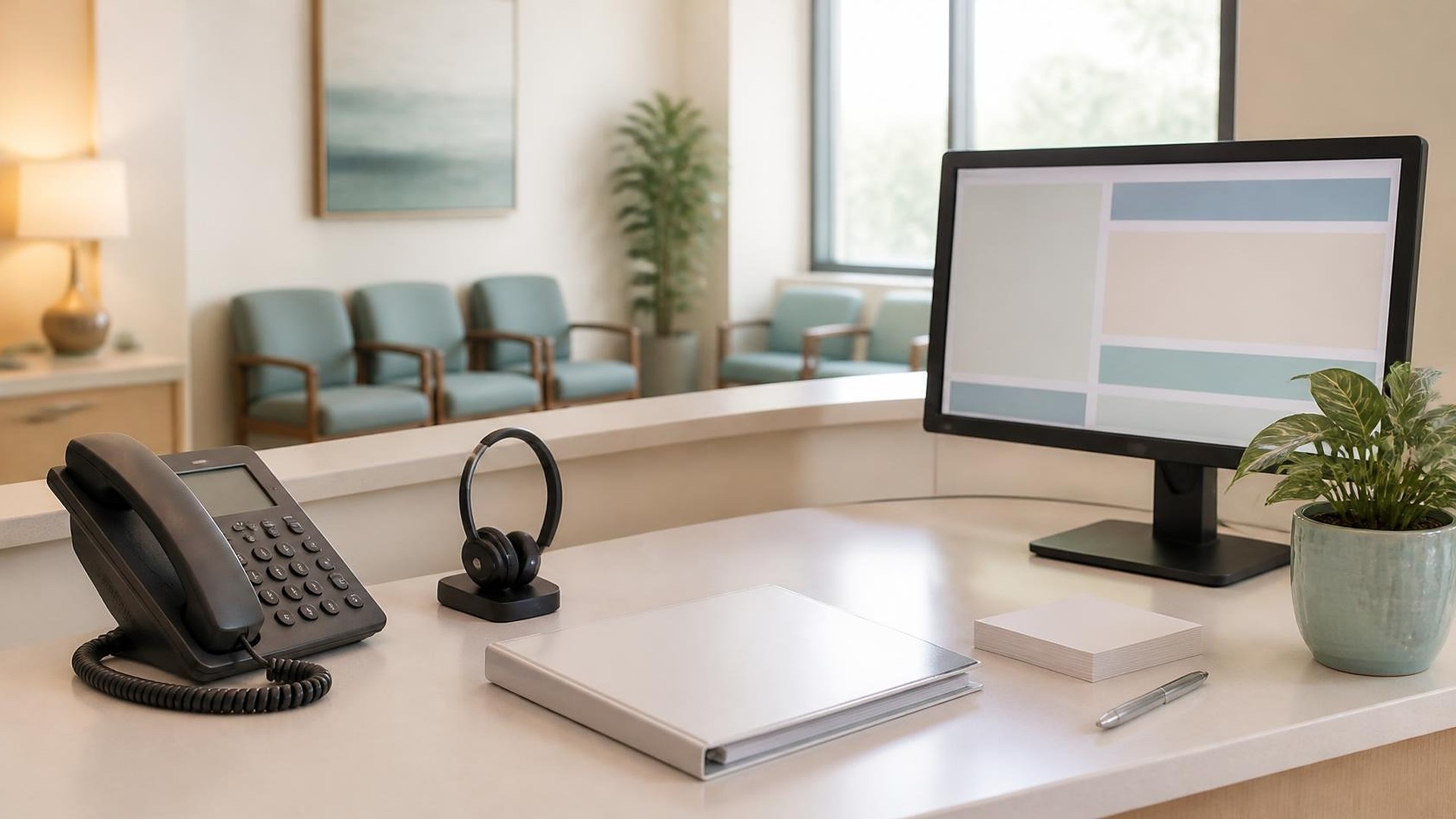
What inconsistent bilingual calls look like
At 8:01 a.m., the phones at a small medical office start ringing. One caller wants directions to the new suite. Another needs to move Thursday's appointment. A third asks, in Spanish, whether the office takes walk-ins. Whoever picks up first answers, in whatever language they are most comfortable with, using whatever words come to mind. Some callers get a clear answer. Others get transferred twice, put on hold, or asked to call back "when María is here."
Most of these calls are administrative: hours, directions, appointment requests, reschedules, forms, and billing-office questions. They are also predictable. That makes them a good fit for shared scripts and a call queue that knows which language the caller prefers, so every caller gets the same clear answer in English or Spanish.
This article is about administrative call handling only. It does not cover clinical advice, medical questions, patient records, or privacy compliance. Those decisions belong to the practice, its compliance lead, and the vendors that hold patient information. TwoQM has already written about routing appointment inquiries without losing the thread. This piece looks at the phone side: what staff say, and how calls wait.
Here is an original example, not a TwoQM client and not a measured result. A three-provider office has two bilingual staff members and one who speaks only English. When both bilingual staff are busy, Spanish-speaking callers wait the longest or are asked to leave a message. Each person explains the late-arrival policy a little differently. The Spanish explanation was translated once, years ago, from a version that has since changed. Nobody is doing anything wrong. There is simply no single, approved version of what the office says.
Start with the ten calls you get every week
Before any software, list the administrative calls that come in every week. For many offices, the list looks something like this:
Hours, holiday closures, and directions or parking
New appointment requests
Reschedules and cancellations
Late arrivals and missed appointments
Which forms to bring or fill out before a visit
Questions for the billing office
Requests that must go to a specific person, such as a referral coordinator
For each call, write down who handles it, what the caller needs to hear, and when the call must be passed to someone else. Anything clinical, such as symptoms, results, or medication questions, should be handed to clinical staff under the practice's own policies, not answered from a front-desk script.
Write each script once, in both languages
A good front-desk script is short. It says what to tell the caller, what to ask, and where the call goes next. Write the English and Spanish versions side by side, not as a translation done after the fact:
Approved wording. The exact policy language your office has agreed to, such as the late-arrival or cancellation policy.
Questions to ask. Only what is needed to route the call, such as the caller's name, a callback number, and the type of request. Do not use scripts to collect symptoms or medical details.
Hand-off rule. "If the caller asks about test results, transfer to the nurse line." "If the caller asks about a bill, send them to the billing queue."
Owner and review date. Who approved the script and when it was last checked.
Have a fluent bilingual staff member review the Spanish version for natural, respectful phrasing, not just accuracy. Many offices in South Texas serve families who switch between languages in the same conversation, and scripts should sound like a person talking, not a form.
Design call queues around language and request type
Most business phone systems can route calls with a short menu and separate queues. The design questions are about your office, not the technology:
Language first or request first? A greeting that offers English or Spanish up front lets the system send the call to staff who speak the caller's language.
Who is in each queue? Bilingual staff can sit in both queues. When they are busy, the system can offer a callback instead of a long hold.
What happens after hours? A recorded message in both languages should give office hours, how to leave a message, and the practice's instruction for emergencies.
Where do messages go? Voicemail and callback requests should land in one shared list with an owner, not in someone's personal inbox.
If your phone system, scheduling tool, and staff task list do not talk to each other, connected systems can link them so a callback request becomes a task with a language preference attached. What information those systems may store is a decision for the practice and its vendors.
Automation first, then AI drafts a person reviews
Ordinary business automation covers most of this: route calls by language, create a callback task when the queue is full, remind staff about callbacks that are still open, and flag scripts that are past their review date.
AI can help with drafting. It can produce a first Spanish version of a new script, or suggest plainer wording for a confusing policy. A bilingual staff member reviews and approves every draft before it is used. AI does not answer patient calls, give medical information, or decide where a call goes.
Where to start this week
Pull last week's call log or ask the front desk to tally calls for two days. Group them into the ten or so administrative types above. Write the top three scripts in English and Spanish, have them reviewed, and put them where every staff member can see them during a call. Then look at how long Spanish-speaking callers wait compared with English-speaking callers, and adjust the queues.
TwoQM works with medical and wellness practices on administrative workflows and serves bilingual markets in English and Spanish. If your front desk wants one approved way to answer the same calls in both languages, TwoQM can scope it around the phone and scheduling tools you already use. Pricing explains how business apps, systems, and custom software are scoped.
Describe Your Front-Desk Call Flow · Explore TwoQM business automation