Give every vehicle one record from the first call
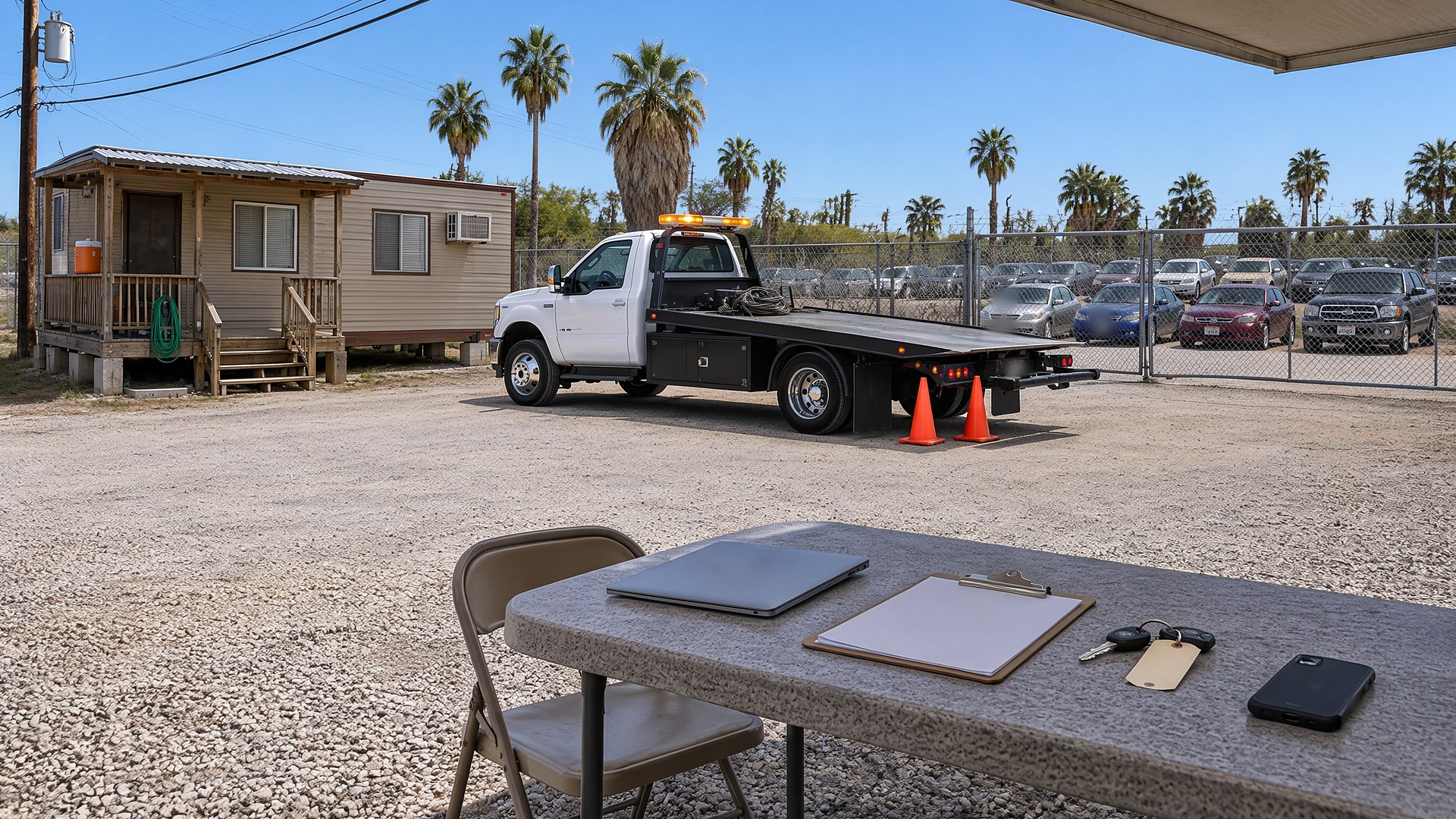
Picture a towing company with three trucks, one storage lot and one office window. On a Monday morning, a man comes to the window for his car. He has his driver's license, but the title is in his mother's name and the insurance card is expired. The person at the window calls the owner, who is out on a call. Twenty minutes later a second clerk, who did not hear the first conversation, releases the car because the fees were paid. That afternoon the man's mother calls asking why her car was given to someone else. A week after that, another customer says the bumper was scratched on the lot, and the only intake photos are on the driver's personal phone.
That scene is an original illustration, not a TwoQM client and not a measured result. It describes a common gap at towing companies and vehicle storage lots: the tow is logged, but the release depends on whoever happens to be at the window.
This article is about giving every vehicle one record, from hookup to storage to release, with a checklist that has to be complete before the gate opens. It is not about which documents the law requires, what fees can be charged, or how long a vehicle can be held. Your license, your posted policies and your attorney decide that. The software only records what happened and follows the rules you set.
The record starts when the tow is dispatched, not when someone shows up at the window. Each vehicle gets one record with:
The tow request: who called, the reason for the tow as your dispatcher recorded it, the pickup location and the time.
The vehicle: make, model, color, VIN and plate, entered once by the driver and checked at the lot.
Intake photos: all four sides, the interior, and any existing damage, taken by the driver at hookup and again when the vehicle is parked, saved to the record instead of a personal phone.
The lot location: row and space, so anyone in the office can find it.
The notice steps your policy requires, with the date each one was done.
When a customer calls, whoever answers sees the same record. Nobody has to text the driver to ask where the car is.
Build the release checklist from your own rules
The release screen is a checklist, and each item comes from your written policy, not from memory. A typical list might include:
Photo ID of the person picking up, compared to the name on the ownership document.
Proof of ownership, or a written authorization from the owner when someone else picks up, using the form your policy accepts.
Any other document your policy lists, such as current insurance.
Fees paid, with the receipt attached to the record.
A release photo set, taken at the gate before the vehicle leaves.
The name of the staff member who released it.
The release button stays locked until every required item is checked. If the person at the window cannot complete the list, the record shows exactly what is missing, so the customer hears the same answer from everyone and knows what to bring back.
For exceptions, such as a lienholder, a law enforcement hold or a dealer pickup, the record routes to the person you choose. They approve the exception in writing in the record, so the next shift can see why the vehicle was released or held.
Photos that settle the scratch question
Most damage disputes come down to one question: was it there before the tow? When intake photos are taken at hookup, at parking and at release, all with timestamps and all in one record, the answer is usually a few clicks away. The record does not decide who is right. It shows what was photographed and when, and your staff take it from there.
Connect the pieces you already use
Many towing companies already have a dispatch app, a payment terminal and an accounting system. A custom release tool does not have to replace them. With connected systems, dispatch can create the vehicle record, the payment can mark fees as paid, and the daily release log can feed your books, so nobody types the same VIN three times. The same idea shows up in other businesses that track physical items, like auto repair key tags and lot locations and dry cleaner garment tickets with condition photos.
Bilingual at the window
In the Rio Grande Valley, many people at the window will want to talk in Spanish. The checklist and the list of missing documents can be shown and texted in English or Spanish from the same record, using approved wording. A bilingual business glossary keeps terms like "proof of ownership" and "release" consistent, whoever is working that day.
Where AI fits, and where it does not
AI can help with the paperwork around the release. It can read a photo of an uploaded document and suggest which checklist item it might belong to, draft an English or Spanish message listing what is still missing, and summarize a vehicle's history for a manager reviewing a dispute.
AI never decides whether a document is valid, never releases a vehicle, never approves an exception, never sets or changes a fee, and never sends anything without a person approving it. Those decisions belong to your staff.
Where to start this week
Look at the last ten vehicles that left your lot. For each one, check whether you can show who picked it up, which documents they showed, what they paid and what the car looked like when it left. Those ten records show whether the release checklist, the photo steps or the dispatch connection would help first.
TwoQM builds custom software, automation and connected systems for small businesses in the Rio Grande Valley and beyond. This article describes operational workflow only. It is not legal advice. Pricing explains how business apps, systems and custom software are scoped.
Describe Your Vehicle Release Workflow · Explore TwoQM Custom Software