
Show your process as numbered steps
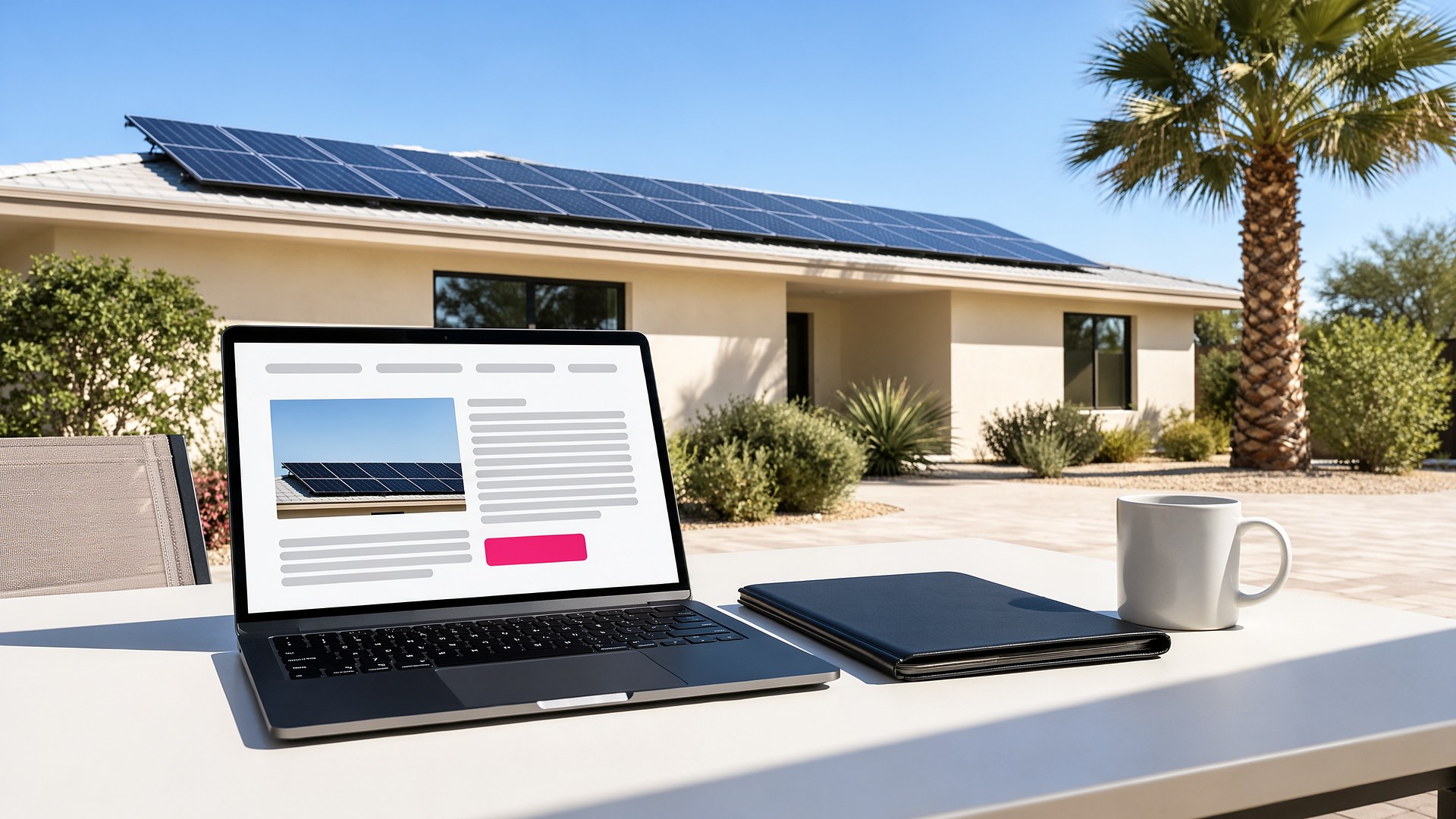
Picture a small solar installation company in the Valley with two crews and an office manager who also answers the phone. A homeowner in Harlingen has seen panels go up on three houses on her street. She searches for local installers, opens a website with a big photo of a roof and a button that says "Get a free quote," and still does not know what happens after she clicks. Will someone come to the house? How long does the city take? When does the system actually turn on? She calls two companies. The one that explains the steps clearly, in Spanish for her mother, gets the visit.
That scene is an original illustration, not a TwoQM client and not a measured result. It describes a common gap for solar installers: the crews know the process by heart, but the website shows a roof and a quote button and leaves the homeowner guessing.
This article is about building a solar installer website that explains your process step by step, tells homeowners what to have ready, and sends a complete request to your office, in English and Spanish. It is not about incentives, tax credits, savings estimates or financing. Those depend on each homeowner's situation, current law and the professionals they work with, and your website should not promise any of them.
Most homeowners have never bought a solar system. A simple, numbered process page answers the questions they are too unsure to ask. Use your own steps and your own names for them, for example:
First conversation: what you ask, and what the homeowner should have ready.
Site visit: what your team looks at on the roof, the electrical panel and the property, and how long a visit usually takes.
Proposal: what the proposal includes and how you walk through it.
Permits and approvals: who files with the city or county, and that the utility has its own review.
Installation: what installation day looks like for the family.
Inspection and permission to operate: that the system turns on only after the required inspection and the utility's approval.
Do not put fixed timelines on the page. Each step depends on the city, the utility and the season. Words like "your project manager will tell you what to expect at each step" are honest and still reassuring.
Tell homeowners what to have ready
A short "Before your first call" section saves your office manager hours. List the items you actually ask for, such as:
A recent electric bill, so you can see usage, with a note to cover account numbers if they send a photo.
The approximate age of the roof and any recent roof work.
Whether there is an HOA, and whether the homeowner has its guidelines.
Photos of the electrical panel and the roof, taken from the ground.
Preferred language and the best time to call.
A request form that matches the steps
The quote form should ask for what the first conversation needs, not everything at once: address, the items above as optional uploads, and a free-text box for questions. The request goes to one shared inbox or system, not a salesperson's personal phone, with an automatic confirmation that tells the homeowner what happens next, in the language they chose. If your crews track permits and inspections on a shared board, the idea in permit status boards the office and field both see carries over to solar projects.
Trust signals that are real
Homeowners compare installers carefully. Show what you can back up: the licenses your work requires, your insurance information, real photos of your own installations, the brands you install if you want to, and reviews from real customers. Avoid savings claims, "free solar" language or any promise about incentives. A clear process page earns more trust than a big number.
Built for phones and for Spanish
Most homeowners will find you on a phone. Large buttons, a short form and a tap-to-call or tap-to-text option matter more than animations. In the Rio Grande Valley, a full bilingual website lets families read every step in the language they prefer, with the same details in both versions.
Show up in local search
A page for each area you serve, consistent business information and real project photos help homeowners find you when they search nearby. Local SEO ties the website, the Google Business Profile and your reviews together, so the same company shows up everywhere with the same details. TwoQM also works with other contractors on the same foundations.
Where AI fits, and where it does not
AI can help you draft the process page from your own notes, turn it into a Spanish draft for review, and write first-draft replies to quote requests that your team edits before sending.
AI never invents prices, savings, incentives, timelines or results, never describes a step you do not actually follow, and never publishes or sends anything without you approving it.
Where to start this week
Write down the last ten questions homeowners asked before agreeing to a site visit. If most of them are about what happens next, how long it takes or what to have ready, those answers belong on your website, step by step.
TwoQM designs and manages websites for small businesses in the Rio Grande Valley and beyond, in English and Spanish. Pricing explains how website plans work.
Request a Website Preview for Your Solar Company · Explore TwoQM Websites