
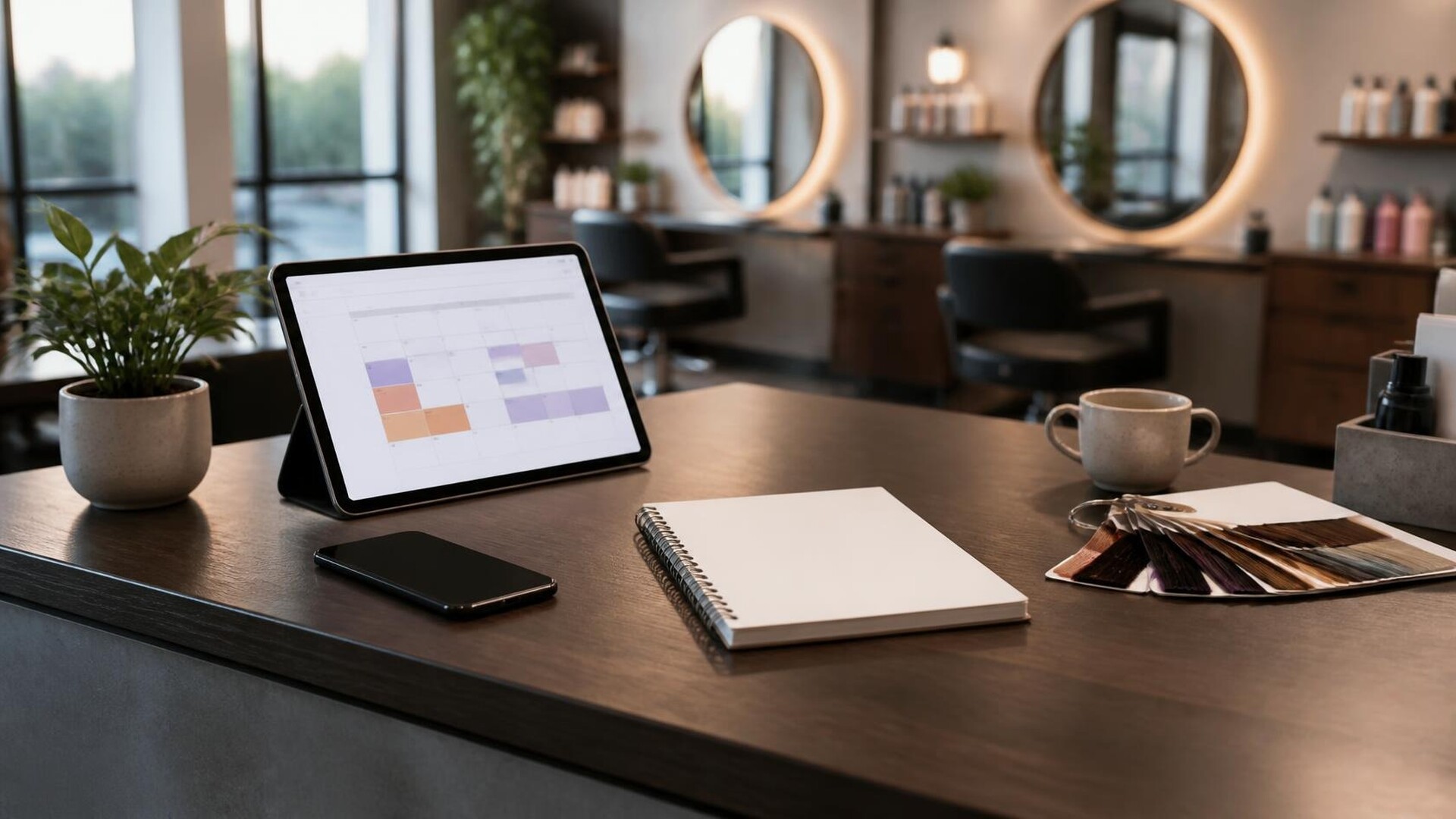
Where a booking inquiry starts
A full book does not mean the front desk is organized. Many salons already pay for Square Appointments, Fresha, Vagaro, or GlossGenius, then still lose a color consultation in an Instagram message, a formula in a paper book, and a rebook with whoever answered the phone. The booking app is not the workflow. The workflow is the path from the first message to the next visit.
This map is for hair salons, color studios, and small teams that share a chair schedule. A new website alone does not stop no-shows. TwoQM develops custom software, automation, CRM workflows, and connected systems when the tools you already run do not hand the work to the right person. A public site, hosting, and email can sit beside that work. They are not the whole job.
Here is an original example, not a TwoQM client and not a measured result. A six-chair color salon gets a Sunday-night Instagram message asking whether a balayage consult can happen Thursday and what a partial highlight “usually” costs. The owner sees it Monday, between clients. The guest’s sister has already booked a haircut online, on Fresha or Square, with a different stylist. Neither record mentions the other. Last year’s formula is still under a previous last name in the paper book.
The same request may start on the booking page, in Instagram or a Google Business Profile message, on the owner’s personal phone, on a sticky note, or in a bridal-party email.
Ordinary automation already covers a large share of this when it is on and pointed at the right inbox. Square Appointments can send SMS and email reminders tied to the live calendar, keep a customer directory, and use Square Assistant to confirm, cancel, or reschedule. Fresha, Vagaro, and GlossGenius also send reminders and can hold a client profile, a deposit, or a card on file, so a no-show policy is more than a sign on the mirror. They do not, by themselves, merge a direct message with the client record or tell a junior stylist which consults they may book.
Write the staff path first
One intake shape. Every new color or extension consult collects the same facts: service, preferred stylist, timing, photos the guest already sent, and whether they have visited. A widget can require some of that. A direct message cannot, unless someone copies it into the profile the same day.
One owner for unscheduled messages. Name who checks Instagram, Google messages, and the salon text line, and by what time. “Whoever is free” means Sunday waits until Tuesday.
Durations that match the service. A root retouch and a first color correction do not share a length, a buffer, or a stylist. Processing time should be a calendar rule, not a memory trick.
Reminders with prep, not only a clock time. Name the time, the stylist, and what the guest must know: clean dry hair, the reference photo, the deposit policy. Send one test to your own phone before you trust the template.
Notes the next stylist can open. Formula, the last price range you quoted, and preferences the guest already shared belong on the shared profile, not in one camera roll. If it is not on that profile, the next person does not have it.
Rebooking at checkout. Offer the next visit before the guest leaves, or send one follow-up when that service is due again. Pick one path so two people do not text the same guest.
Automation, then a draft a person sends
Use ordinary automation when the answer is already on the calendar: confirmations, reminder timing, a waitlist text after a cancellation, and a short note that a request arrived. Those steps should not wait on a language model, and they should not invent an opening the calendar does not have.
AI fits when the message is messy and a person still decides. A note like “something like the photo, less ashy, wedding in five weeks” can become a short brief: likely service, constraints, and what is missing. A draft reply can point at price bands you already publish and ask for photos. It must not invent a price, promise a Thursday, or send itself. AI and automation (https://twoqmllc.com/ai-automation) at TwoQM starts with the task, the information it may use, and the person who reviews the result. Model usage is an operating cost, separate from the build.
A CRM workflow (https://twoqmllc.com/crm) helps when the profile is too thin for bridal parties or for stages such as new consult, waiting on photos, and rebooked. If the booking tool already holds the record the team opens, connect to it instead of a second database.
When a custom piece is justified
Custom software fits when the same handoff breaks every week and no booking-tool setting fixes it: chair renters who must not see one another’s clients, intake in English and Spanish, or a consult that must land on one book with photos attached. Agree on permissions, and on what happens if the vendor connection fails, before anyone builds it.
Software and websites for hair salons (https://twoqmllc.com/industries/hair-salons) are planned around service length, who may book which chair, and how an inquiry meets the schedule. That is not a generic template, and it is not “you need a website” as the fix for reminders. If the public site hides the booking link, fix the link.
Describe a workflow
Write down the path you are losing: new color consults, reminders guests never see, or rebooks nobody offers. Describe that workflow (https://twoqmllc.com/business-automation) to TwoQM. We are based in Brownsville, Texas, and we deliver nationwide, in English and Spanish. We will say whether your current booking platform, a connection between tools, or a small custom piece fits—and what it will not do. An inquiry is not a quote, and it is not a claim that a system is already built.