
Give every costume its own line
Picture a dance studio with eight classes in the spring recital. Each class has its own costume, and each dancer needs a size. The front desk collects measurements on paper slips, takes deposits in cash, by card and through a payment app, and keeps a spreadsheet of who still owes what. Two weeks before the costume order is due, a parent asks whether her deposit went through. Another says her daughter grew and needs a bigger size. A third has two children in three classes and cannot tell which balance is which. The owner spends the evening comparing the spreadsheet to the payment app, one family at a time.
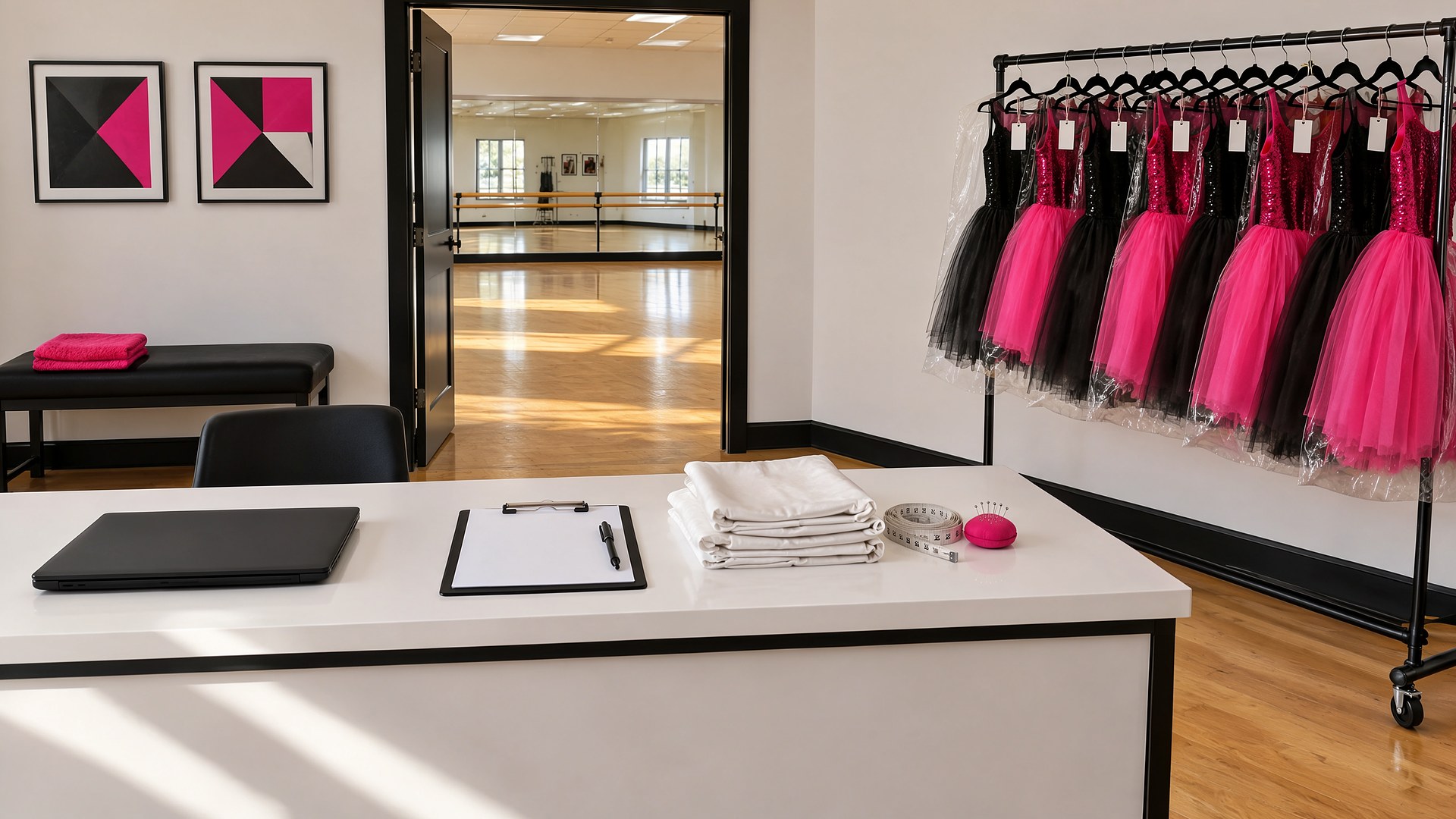
That scene is an original illustration, not a TwoQM client and not a measured result. It describes a common gap at dance studios, music schools and other recital-based programs: the costume order is really dozens of small orders, but the records live in four different places.
This article is about giving every costume its own record and giving parents one place to see it. It is not about what your refund or late-payment rules should be. Your written studio policies decide that. The software records what happened and follows the rules you set.
The recital is one event, but each dancer in each class gets a line of their own:
Who and which class. The dancer's name and the class, so a family with two children in three classes sees three separate lines.
Which costume and size. The costume chosen for that class and the size taken from the studio's measurement step.
What was paid. Each deposit and payment, with the date and how it was paid.
Where it stands. Measured, deposit received, ordered from the supplier, arrived, picked up.
When each costume has its own line, the front desk can answer "did my deposit go through" by looking at one record instead of three tools.
Put measurements in the record, not on paper slips
A short measurement form, filled in at the studio by staff during class, stores sizes on the dancer's line. If a parent asks for a size change, the request is attached to that line with the date, and the studio decides whether it can still be changed before the supplier order goes out.
Your costume deadline is the one firm date in the whole process. The record shows which lines are still missing a size or a deposit, so staff follow up with those families first instead of messaging everyone.
Tie every payment to the right line
Deposits come in through whatever payment tools the studio already uses. Instead of copying them into a spreadsheet by hand, each payment is matched to the family and then to the costume line it covers. A payment that cannot be matched, such as a lump sum for two children, goes to a short review list for the office to split.
The balance a parent sees is the same balance the office sees, because both come from the same lines. This is the same idea behind class pack balances and freeze requests staff can trust at a fitness studio, and tuition statements families get in their language at a child care center.
Give parents one portal, in English or Spanish
A simple parent portal shows each child's costume lines: size on file, what has been paid, what is still owed, and when the costume is expected. Parents choose English or Spanish. They can ask for a size change or upload a payment receipt from the same page, and the request lands on the right line instead of in someone's text messages.
Tutoring centers use a similar approach for parent portals with session notes and progress. The goal is fewer "just checking" messages.
Order from the supplier only when the lines are complete
When the costume deadline arrives, the office pulls a list grouped by costume and size from the lines marked ready. Lines still missing a size or deposit stay off the order and show up on a short list for the owner to decide, following your written policy. When costumes arrive, staff mark each line arrived, and parents see it in the portal. Pickup is checked off line by line, so nothing is handed to the wrong family.
Where TwoQM fits
Custom software can provide costume lines, the measurement form, and the parent portal when your current class software only tracks enrollment. Connected systems can match payments from the tools you already use to the right family and costume. Business automation can send reminders to families with missing sizes or balances before the deadline. What fits your studio is confirmed during scoping.
Where AI helps, and where it stops
AI can suggest which family an unmatched payment belongs to for the office to confirm, summarize a family's costume lines before a phone call, and draft reminders or replies in English or Spanish for a person to review. Drafts follow the same rule as AI-drafted follow-ups with human send approval.
AI never applies a payment, never changes a size, never grants a refund or an exception, and never sends anything without a person approving it. Those decisions belong to your staff.
Where to start this week
Look at last season's recital. Count how many messages the front desk got about sizes, deposits and balances, and how many payments had to be matched by hand. Those numbers show whether the costume lines, the payment matching, or the parent portal would help first.
TwoQM builds custom software, automation, and connected systems for small businesses in the Rio Grande Valley and beyond. This article describes operational workflow only. It is not legal, tax, or payment processing advice. Pricing explains how business apps, systems, and custom software are scoped.
Describe Your Recital Costume Workflow · Explore TwoQM Custom Software